So, you want to be a cosmetic tattooist? Whether you’ve fallen in love with the flawless finish of a lip blush tattoo, admired a friend’s permanent eyeliner or found yourself scrolling social media feeds full of crisp microblading applications, the path to becoming a professional in this industry is exciting and rewarding. At Cosmetic Tattoo Studio Brisbane Face Figurati, we know firsthand that the journey takes more than just artistic flair — it’s about skill, safety and serious dedication.
Contents
- 1 Why People Are Choosing Cosmetic Tattooing as a Career
- 2 The Essential Qualifications
- 3 Tattoo License and Health Standards
- 4 Core Skills Every Cosmetic Tattooist Needs
- 5 Tools of the Trade
- 6 Popular Treatments You’ll Master
- 7 Training Timeline and What to Expect
- 8 Social Media and Your Success
- 9 Ongoing Education and Career Growth
- 10 Costs and Income
- 11 Common Myths About Being a Tattoo Artist
- 12 The Brisbane Factor
- 13 Final Thoughts
- 14 FAQ
- 14.1 How long does it take to get certified in cosmetic tattooing?
- 14.2 Do I need a tattoo license to work in Brisbane?
- 14.3 What’s the difference between microblading and cosmetic tattooing?
- 14.4 Can I start practising on clients without certification?
- 14.5 How much can a beginner earn in their first year?
Why People Are Choosing Cosmetic Tattooing as a Career
The demand for permanent makeup is booming. According to 2025 industry statistics, the Australian cosmetic tattooing market is expected to grow by more than 12% annually, and Brisbane is one of the fastest-growing hubs. Clients are looking for long-lasting solutions for brows, lips and eyeliner, making skilled tattoo artists more valuable than ever. If you have an artistic eye and the patience for precision, this is one career where creativity meets stability.
The Essential Qualifications
You can’t just pick up a tattoo machine and start inking faces. In Australia, specific training is mandatory. Completing recognised cosmetic tattoo courses is the first step. These cover theory and design, and hands-on practice with fake skins (also known as practice skins). For anyone considering formal training, Cosmetic Tattoo Courses in Brisbane offer modules on health and safety standards, colour theory and advanced techniques like cosmetic lip tattoo and eyeliner tattoo. At Face Figurati, we often remind our students: your certificate isn’t just a piece of paper — it’s proof of your commitment to safe professional practice.
Tattoo License and Health Standards
Operating as a professional requires a tattoo license. Regulations vary by state, but in Queensland, this includes meeting strict health and safety standards. Councils require proof of your training, compliance with infection control and details of the permanent makeup studios you’ll be working in. We’ve seen talented artists held back simply because they skipped the paperwork. Trust us — get your licence sorted before taking clients.
Core Skills Every Cosmetic Tattooist Needs
A solid foundation of skills is non-negotiable. Beyond artistic ability, you’ll need:
- Steady hand control for delicate eyeliner tattoo and microblading applications
- A deep understanding of skin types and healing
- Knowledge of colour correction for old tattoos
- Client consultation and communication skills
These skills are developed through practice, which is why students start on practice skins and then move to live models under supervision. Fake skins are your sketchbook — mistakes are for learning, not for leaving on faces.
Tools of the Trade
Your kit will grow with you, but some essentials are:
- Tattoo machine: Digital machines are the way to go for cosmetic tattooing.
- Disposable needles and cartridges.
- Pigments in various shades.
- Anaesthetic creams.
- Practice skins for ongoing training.
Without the right tools, even the best training won’t shine. We recommend that all aspiring artists invest in quality equipment rather than chasing cheap deals online.
Popular Treatments You’ll Master
A career in cosmetic tattooing opens up a menu of treatments:
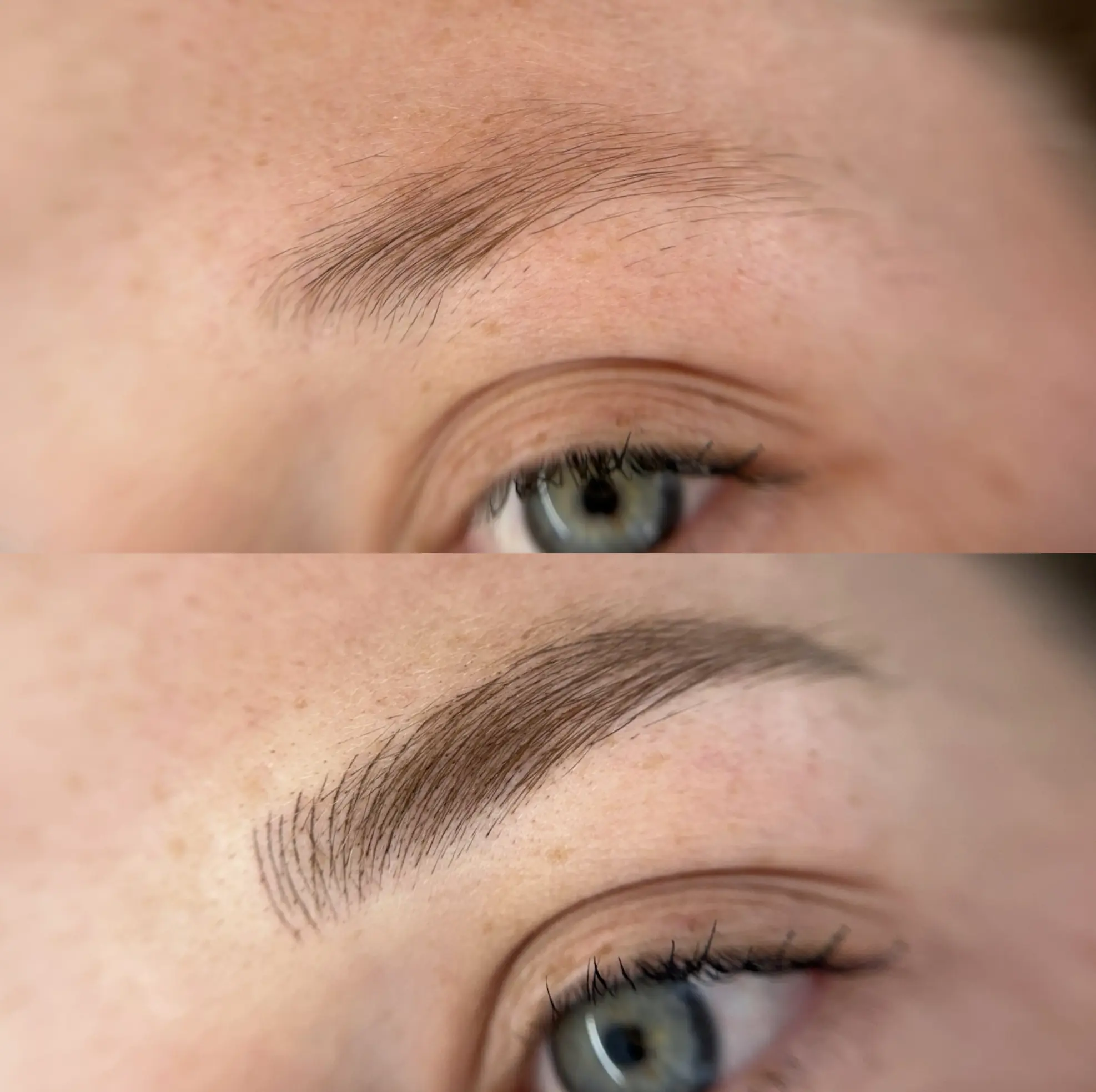
- Microblading for natural-looking brows.
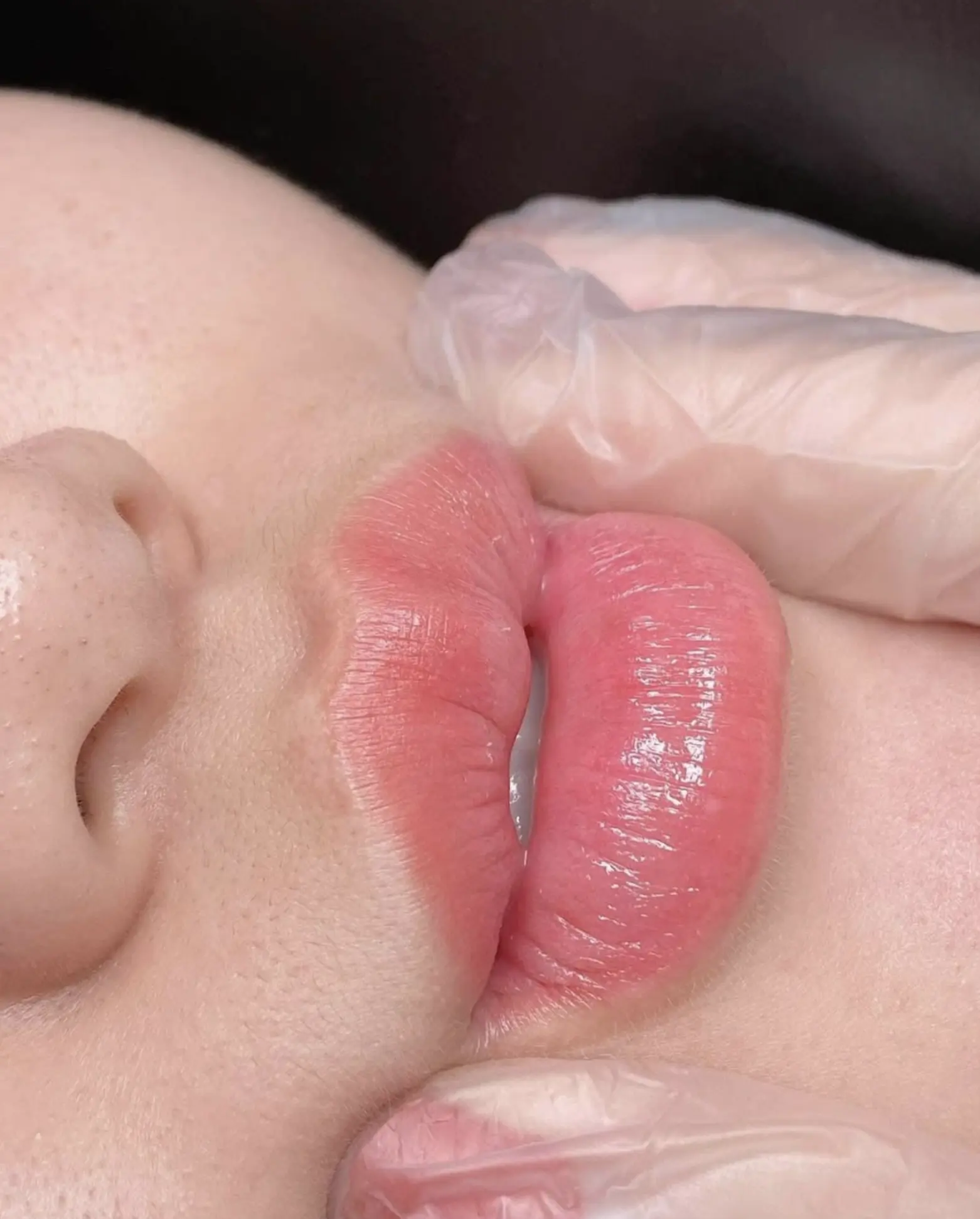
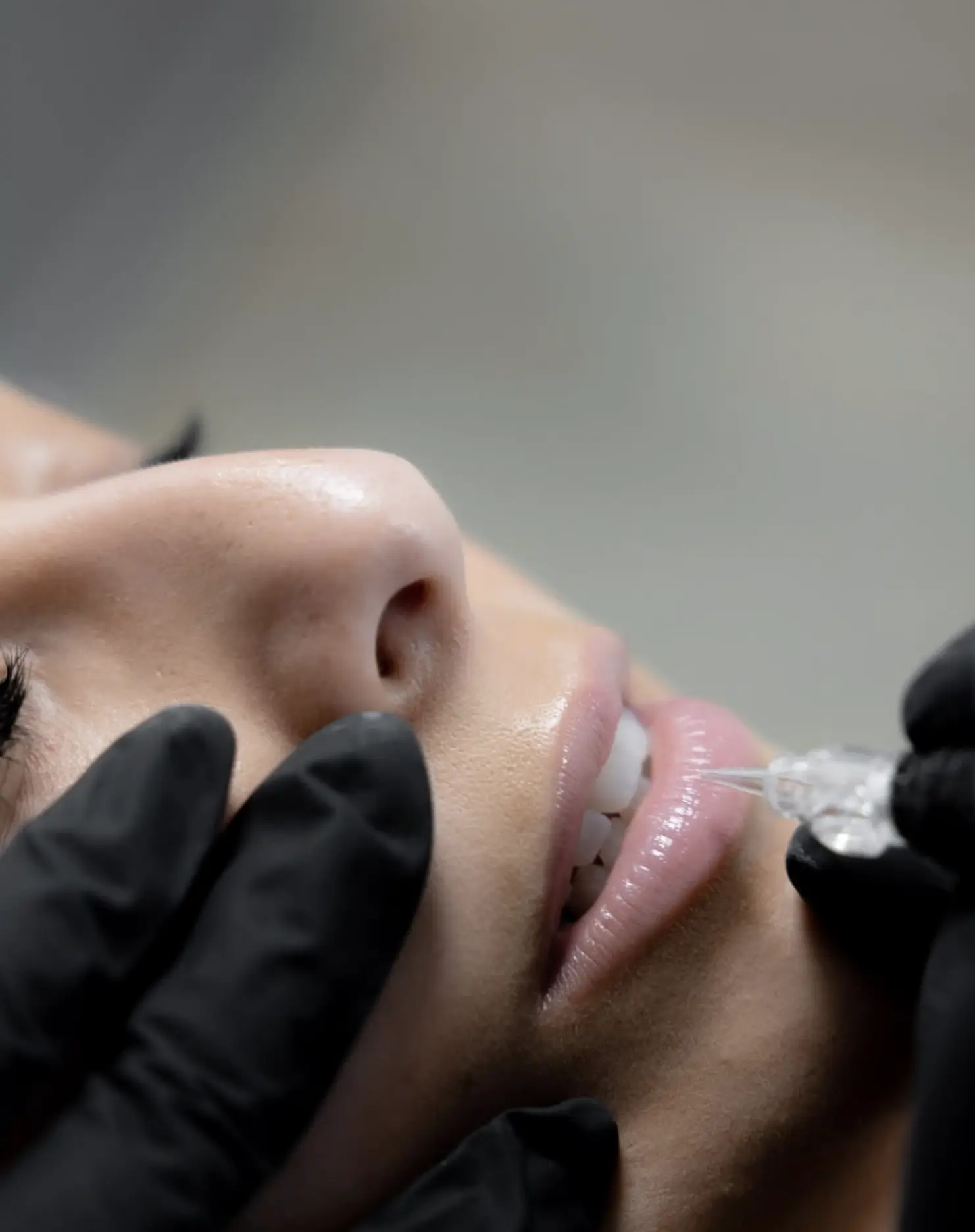
- Cosmetic lip tattoo (lip blush tattoo) for soft, tinted colour.
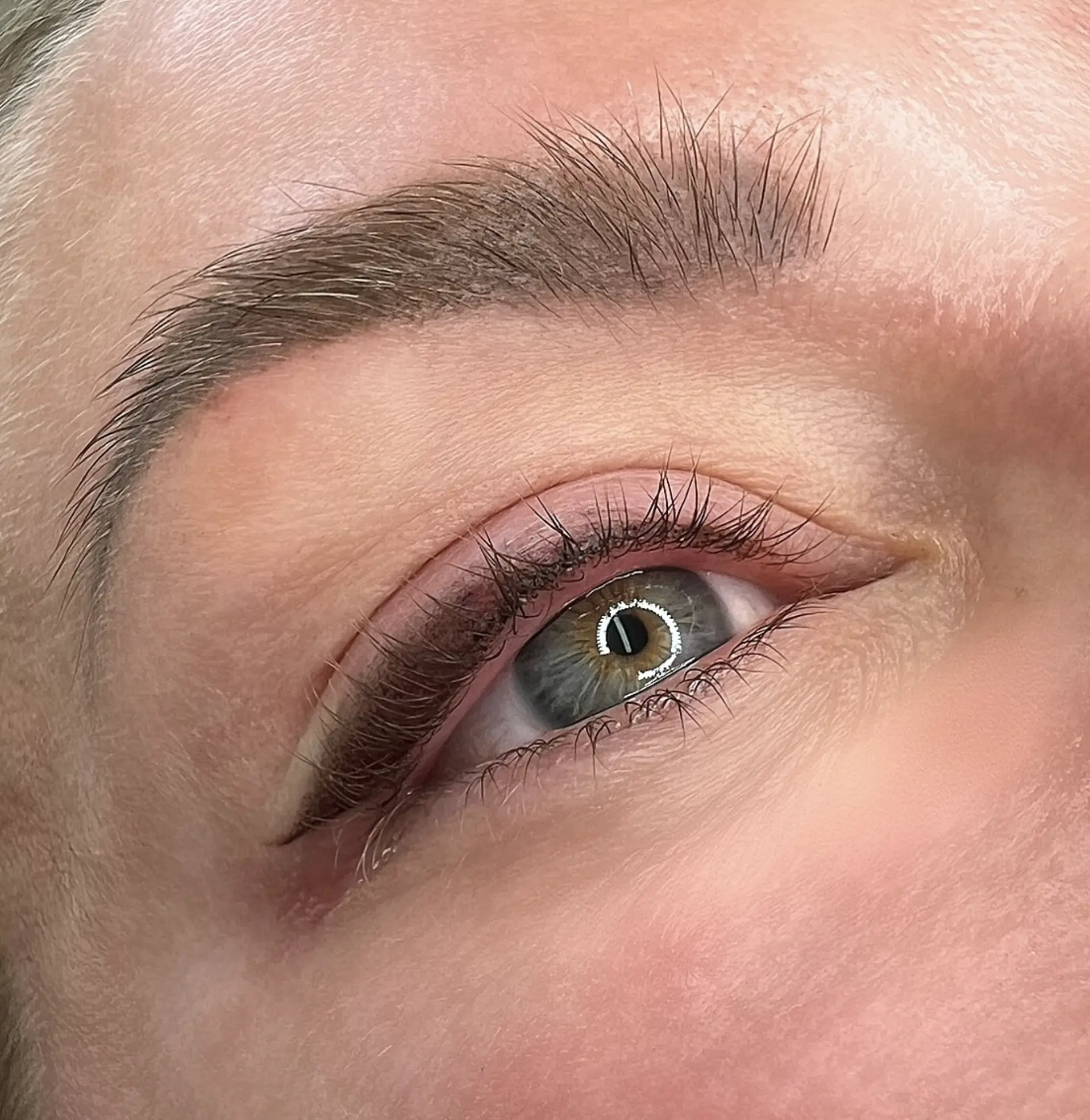
- Eyeliner tattoo or permanent eyeliner for everyday definition.
Each treatment has its own learning curve. For example, eyeliner tattoo requires ultra-fine needle control, and lip blush requires patience with pigment build-up.
Training Timeline and What to Expect
Most cosmetic tattoo courses run from a few weeks to several months, depending on whether you’re training full-time or part-time. Here’s a typical pathway:
| Stage | What You’ll Learn | Duration |
| Beginner Training | Theory, hygiene, practice on fake skins | 2–4 weeks |
| Intermediate | Brow mapping, microblading certification, supervised models | 1–2 months |
| Advanced | Eyeliner tattoo, cosmetic lip tattoo, colour correction | 2–3 months |
| Professional | Independent practice with mentorship | Ongoing |
This timeline isn’t set in stone — some students fly through, others take their time. What matters most is mastering the craft safely and confidently.
Social Media and Your Success
Let’s be real: social media can make or break a new tattooist’s career. A strong Instagram page with healed results will bring in more clients than word of mouth alone. But remember, filters and overly edited photos damage trust. At Cosmetic Tattoo Studio Brisbane Face Figurati, we always encourage our students to share real results, including the healing process. Transparency builds credibility.
Ongoing Education and Career Growth
The beauty industry never stops. New pigments, better machines and evolving techniques mean a one-off certification won’t cut it. Continuous training through workshops and refreshers is key. Many artists branch into teaching, offering their own cosmetic tattoo courses or advanced classes in microblading certification. We’ve seen our graduates open their own permanent makeup studios across Brisbane — proof that growth opportunities are endless.
Costs and Income
Starting out requires an investment. Between training, licensing and equipment, most beginners spend anywhere from $8,000 to $15,000 before seeing a profit. But with average treatment prices in Brisbane ranging from $400 for brows to $700 for lip blush tattoo, the return on investment is quick. A full-time cosmetic tattooist can earn between $70,000 to $120,000 once established.
Common Myths About Being a Tattoo Artist
- Myth 1: “You just need to be good at drawing.” Wrong. You need formal training and strict hygiene compliance.
- Myth 2: “It’s all glamour and Instagram fame.” Behind every pretty post are hours of practice on fake skins.
- Myth 3: “Permanent makeup lasts forever.” Cosmetic tattoo fades and requires touch-ups every 1–3 years.
- Myth 4: “You don’t need a licence if you’re only doing brows.” In Queensland, you do. Full stop.
The Brisbane Factor
Humidity, sun exposure and lifestyle in Brisbane mean pigments may fade differently than in cooler climates. This is why aftercare education is key. At Face Figurati, we tailor our cosmetic tattooing techniques to local conditions — from pigment choice to healing routines. For example, we advise our clients to avoid river swims during healing (yes, even a quick dip counts).
Final Thoughts
So what do you need to be a cosmetic tattooist? More than just an artistic eye. You’ll need proper training, certification, a tattoo license, quality tools and the drive to keep learning. At Cosmetic Tattoo Studio Brisbane Face Figurati, we’ve trained hundreds of students through our Cosmetic Tattoo Courses in Brisbane, and we know the industry rewards those who combine skill with professionalism. If you’re serious, the career can be life-changing – financially and creatively.
FAQ
How long does it take to get certified in cosmetic tattooing?
2–3 months for entry-level courses, with ongoing education recommended.
Do I need a tattoo license to work in Brisbane?
Yes. Queensland tattoo license and compliance with health and safety standards are required.
What’s the difference between microblading and cosmetic tattooing?
Microblading uses a manual blade to create hair strokes, while cosmetic tattooing uses a tattoo machine for softer shading and longer-lasting results.
Can I start practising on clients without certification?
No. You must complete training and supervised practice on fake skins and models before taking clients.
How much can a beginner earn in their first year?
Beginners typically earn between $40,000 and $60,000, depending on hours and client base, with rapid growth once established.